on Tripadvisor


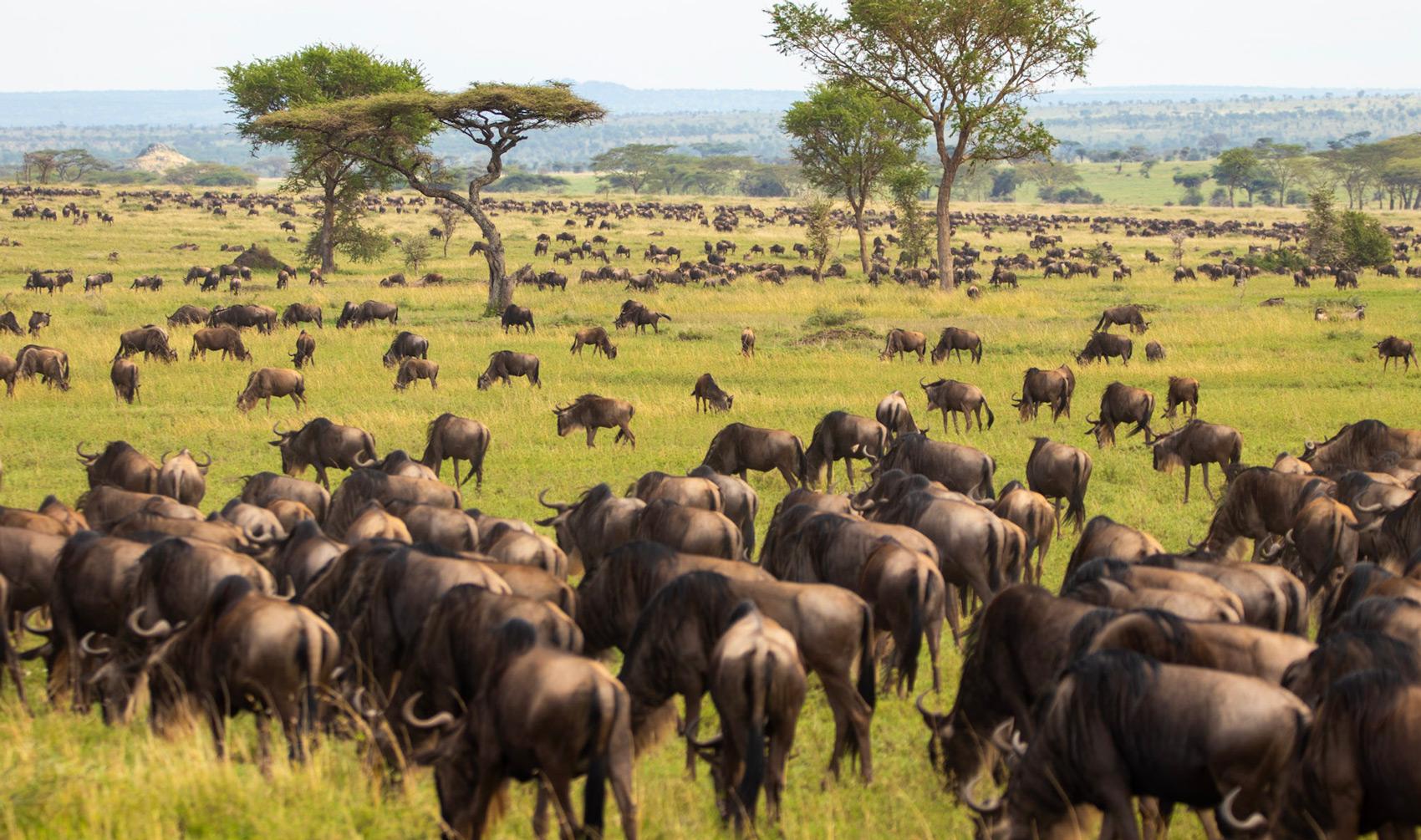
Before sunrise on the southern Serengeti plains, the darkness already has a voice. Wildebeest grunt somewhere beyond the vehicle. Calves call to their mothers. A hyena moves through the blue half-light with the steady pace of an animal that knows exactly where it is going.
There is no riverbank and no dramatic plunge into crocodile-filled water. Yet this is the Great Migration, every bit as much as a crossing in the north.
For the Serengeti’s predators, the Migration is not a single spectacle. It is a year-round shift in opportunity. As vast herds move through different parts of the ecosystem, lions, cheetahs, hyenas and other hunters respond in very different ways. Some wait. Some adapt. A few travel astonishing distances to reach the moving herds.
Do Serengeti Predators Follow the Great Migration?
Not in one neat procession. The Great Migration predators do not simply trail behind the wildebeest all year. Their response depends on territory, habitat, hunting style and competition from other carnivores.
A Moving Source of Prey Throughout the Year
The Migration is a continuous cycle shaped by rainfall and fresh grazing. Around January and February, the herds gather on the southern plains, where hundreds of thousands of wildebeest calves are born. As the plains dry, they move through the central and western Serengeti. By roughly July, many reach the north. After the short rains, the herds turn south again.
The timing is never exact. Rain can bring the herds early, hold them in an area or send them along a different route. That unpredictability is part of understanding the Great Migration in Tanzania: it is a living system, not a timetable.
Wherever the herds concentrate, they change the local supply of prey. Yet abundance does not make a hunt easy. Thousands of wildebeest on open ground may be less useful to a lioness than a few animals passing close to cover. The question is not only, “Where is the food?” It is also, “Can I catch it?”
Wait, Adapt or Commute?
Territorial lions largely remain within familiar ranges and exploit herds when they enter. Cheetahs favour landscapes where speed and eyesight offer an advantage. Some spotted hyenas travel far beyond clan territories to feed before returning home. Leopards rely more heavily on cover and resident prey.
The result is not one predator story, but several overlapping strategies.

Lions in the Serengeti: Waiting for the Herds to Arrive
A lioness lies flat against a small grassy ridge, her coat disappearing into dry grass. The greatest mass of wildebeest is far away. She watches a few stragglers move towards a shallow dip in the ground, where the grass keeps her hidden.
This is how lions in the Serengeti often benefit from the Migration: not by following every movement, but by knowing their ground. When herds enter a pride’s range, the lions’ options expand.
Calving Opportunities on the Southern Plains
During calving, the southern Serengeti and neighbouring Ngorongoro Conservation Area hold an extraordinary concentration of wildebeest. Newborns are vulnerable, but mothers defend them, herds react quickly to alarm, and an adult wildebeest can injure a careless attacker.
Lions may target calves, weakened animals or adults separated from the group. They also have to share this temporary abundance with hyenas and other lions. A successful kill can quickly become a contest of numbers, noise and nerve.
Moving Herds in the Central and Western Serengeti
As the Migration moves north and west, the landscape changes. Grassland gives way to kopjes, drainage lines, woodland and, in the western corridor, denser vegetation around the Grumeti river system. These features can offer concealment that open plains lack.
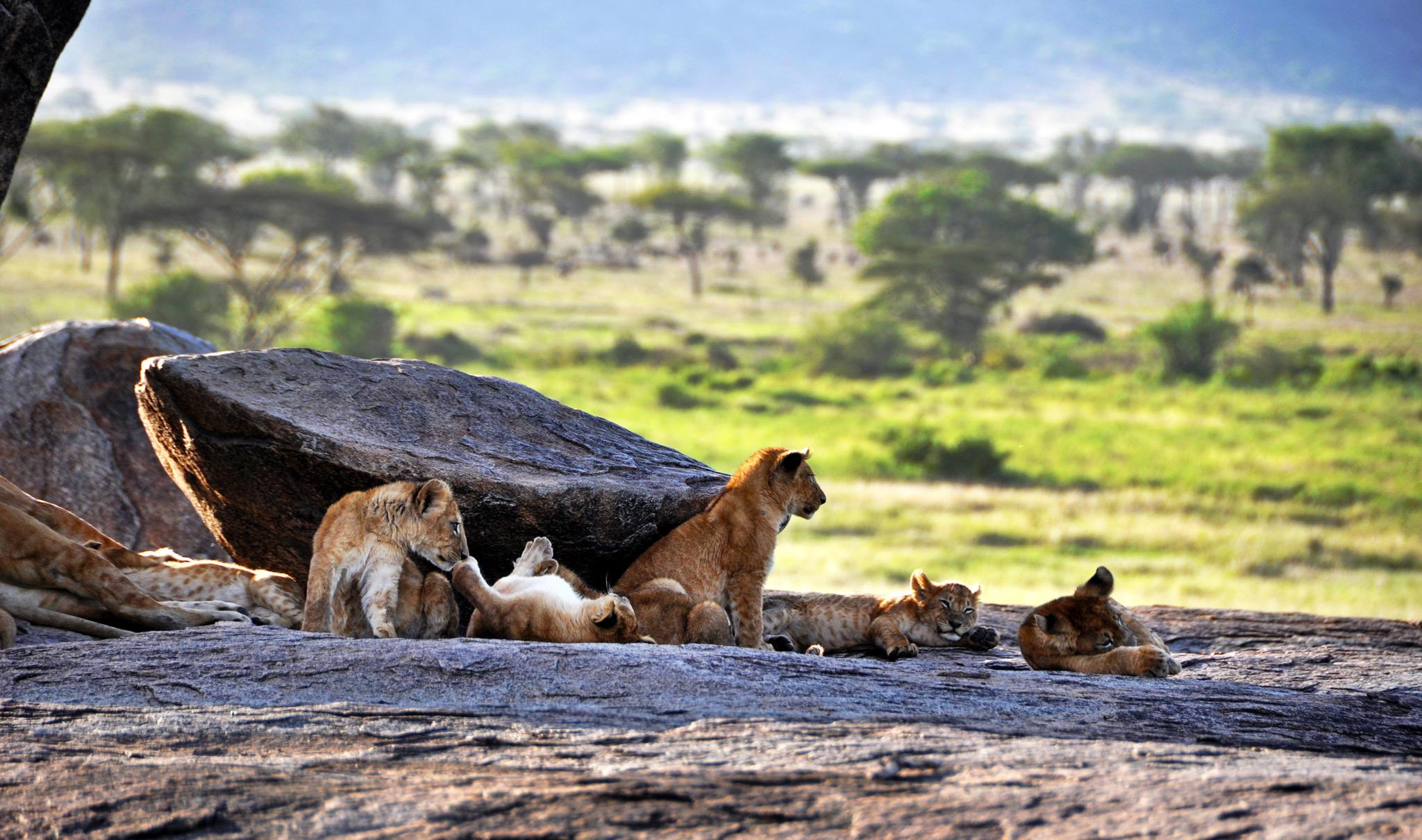
In the middle months, long wildebeest columns pass through resident lion ranges. A revealing sighting may happen far from any river: a pride after a night hunt, cubs at a kill, or lionesses using taller grass to approach moving prey.
Northern Serengeti Beyond the River Crossings
From roughly July to October, attention turns to the Mara River. Crocodiles are part of that story, but the region’s lions hunt across a wider mosaic of valleys, hills, grassland and woodland.
Crossings are unpredictable and can be brief. Lion behaviour continues wherever the herds graze, rest and move through established territories. Looking beyond the water reveals the fuller story.

Serengeti Cheetahs: Why Calving Season Changes the Odds
The vehicle is parked on an open plain, and the morning sun has just begun to warm your hands around a cup of coffee. Two cheetah brothers sit upright in the grass, apparently relaxed. One turns his head. The other rises. Far ahead, a group of gazelles has started to bunch together.
The cheetahs slip lower, using every fold in the ground. Coffee forgotten, you watch the quiet approach become an explosion of speed.
Why the Southern Plains Suit Cheetahs
Serengeti cheetahs are closely associated with the open southeastern plains. Long sightlines help them detect prey and danger, while firm ground suits their acceleration. Thomson’s and Grant’s gazelles are important prey, so cheetahs do not depend on wildebeest calves. Calving simply adds a remarkable opportunity.
Young wildebeest can be caught, particularly when separated from protective adults. Yet every chase is expensive. A cheetah must judge distance, terrain and its target before committing energy.
A Seasonal Feast Surrounded by Competitors
Lions and hyenas can kill cheetahs, take their food or displace them from good hunting areas. A cheetah may abandon a carcass when stronger competitors arrive.
That tension makes calving season compelling. It is not simply a “buffet” for Tanzania’s big cats. It is a landscape of opportunity and risk, where cheetahs must hunt efficiently, eat quickly and remain alert.

Hyenas and the Great Migration: The Serengeti Predators That Commute
In the cool hour before dawn, a lone spotted hyena trots past the vehicle. It does not stop to investigate and it is not wandering. Its pace is economical, its direction unwavering. Somewhere beyond the horizon, thousands of wildebeest are grazing. Behind it, perhaps many kilometres away, lie the clan’s territory and communal den.
Of all the relationships between hyenas and the Great Migration, this ability to commute is one of the most remarkable.
Far More Than Opportunistic Scavengers
The image of a hyena waiting for lions to provide a meal is incomplete. Spotted hyenas are formidable, enduring hunters. They also scavenge, just as lions steal from hyenas.
Hyenas hunt wildebeest and other herbivores, sometimes cooperating against larger prey. Competition at a carcass depends on numbers and circumstance, not a rule that one species always dominates.
How Serengeti Hyenas Commute to Find Food
When migratory herds move away from a clan’s territory, some hyenas leave on long feeding journeys. Serengeti researchers have recorded individuals travelling to foraging areas up to 70 kilometres away. After feeding among the herds, they return to their social territory, where cubs and other clan members remain.
Their home base stays in place while individual hyenas temporarily connect it to a moving source of food. It is a sophisticated answer to an ecosystem where local prey numbers change dramatically.

Do Leopards Follow the Great Migration?
The leopard’s Migration story is quieter. Leaving the bright plains, you enter riverine woodland where branches cast broken shadows across the track. Your guide slows near a freshly scratched trunk. Somewhere above, a leopard may be resting with a meal beyond the reach of hyenas.
Leopards are territorial, solitary and closely tied to cover. Rather than travelling with the wildebeest herds, they usually hunt resident animals such as impala and smaller antelope in woodland, kopjes and along rivers. A leopard may take advantage of young or vulnerable migratory prey that enters suitable habitat, but the herds do not reshape its life as directly as they do for lions, cheetahs or commuting hyenas.
This is also why seeing Tanzania’s big cats often means exploring varied habitat, not simply finding the greatest mass of wildebeest.

Which Other Serengeti Predators Benefit from the Great Migration?
The Serengeti’s predators extend beyond the headline species. The Migration creates opportunities even after the largest carnivores have eaten.
Jackals and Smaller Hunters
At a wildebeest carcass, two lionesses are feeding while black-backed jackals wait at a cautious distance. A pair of hyenas approaches, drawing one lioness away in a rush of dust and snarls. In the confusion, a jackal darts forward, tears away a scrap and is gone before the lions turn back.
Jackals are skilful hunters, taking rodents, birds and other small prey. Around large kills, speed and cheek can earn an extra meal. Servals, caracals and smaller carnivores may also benefit indirectly, although sightings are less predictable.
Crocodiles, Vultures and the Clean-up Crew
Nile crocodiles become prominent when herds attempt river crossings, especially at the Mara and Grumeti. Their ambushes are dramatic, but they represent one brief interaction within a much longer annual cycle.
Vultures reveal another side. Several birds circling low, descending or settling can indicate a carcass and sometimes predators nearby. High-flying vultures may simply be riding thermals, so a good guide reads the pattern rather than treating every circling bird as proof of a kill.
After the larger animals leave, scavengers recycle what remains, completing a process that began with rain, grass and a moving herd.

Is Calving Season Better Than River Crossings for Predator Sightings?
It depends on the behaviour you hope to see. From roughly January to March, the southern plains offer newborn wildebeest, open landscapes and excellent possibilities for cheetah, lion and hyena sightings. Predator activity can be intense, although no hunt or kill is guaranteed.
From April into June, the herds move through central and western areas, where varied terrain creates different opportunities. From July to October, the northern Serengeti combines resident predators with possible crossings, but crossings cannot be scheduled and popular areas can be busy. In November and December, returning herds begin the cycle again.
There is no single “predator season.” On a Tanzania predator safari, the Serengeti National Park offers carnivores and resident prey throughout the year. The best time is the one that matches your priorities, whether that is calving, open-plains cheetahs, northern landscapes or a quieter safari away from peak crossing season.

See the Great Migration Through a Predator’s Eyes
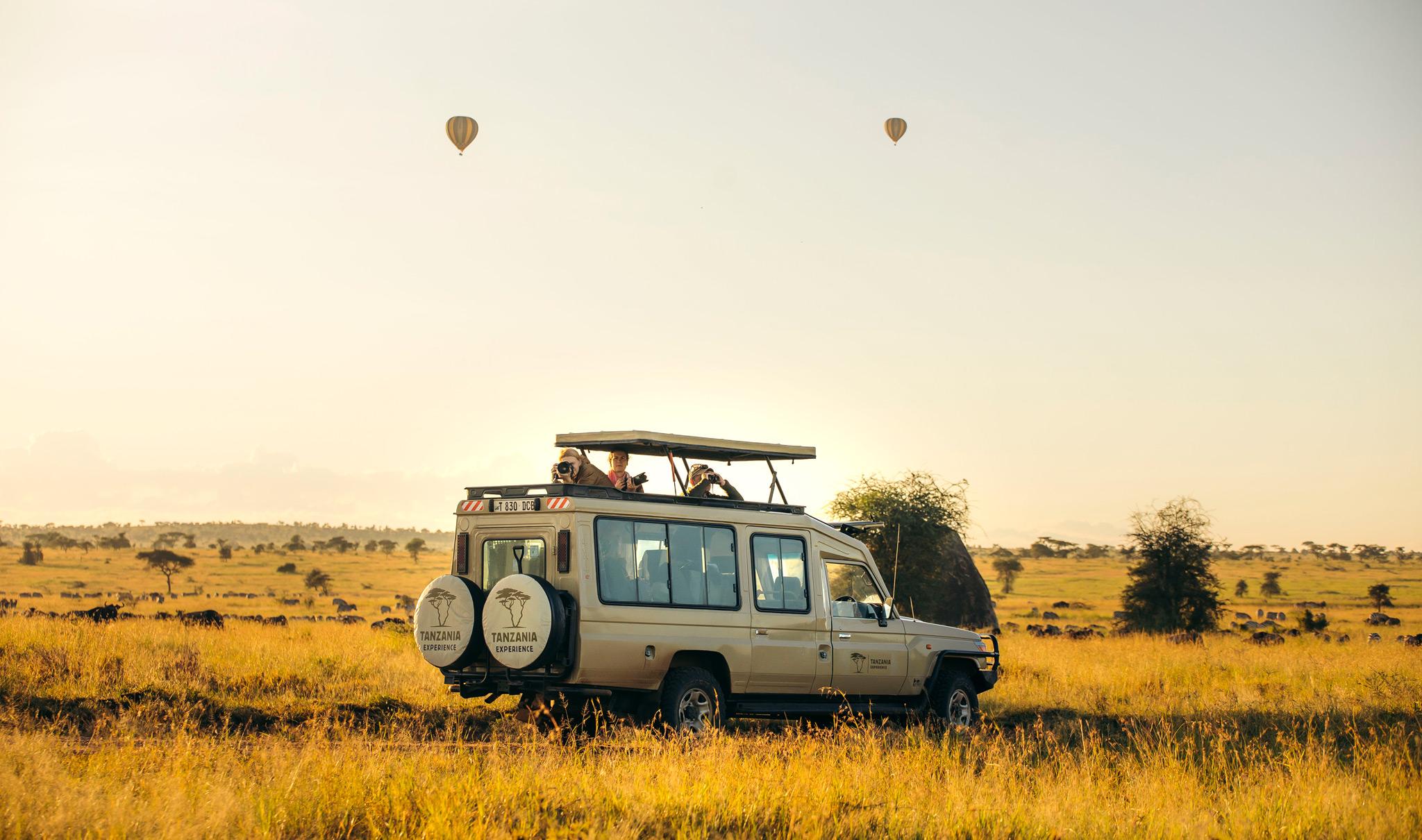
A Serengeti predator-focused safari changes the questions you ask. Instead of racing towards a rumoured crossing, you begin looking for cover, tracks, alarm calls, vultures and the purposeful movement of a hyena before dawn. You notice how the landscape changes the hunt.
Our Big Migration safari adjusts its Serengeti focus with the seasons. Speak with our experienced Travel Experts, and we will help you plan a journey that follows the wider story: not only where the herds are, but how life around them responds.
Author: Taher Nassrulla